How to download at MOODWINGS

MOODSWINGS doesn't host direct links any longer. All the links featured here are text files. You will have to download them, extract them (using the usual password) and open them to find your desired link.
Showing posts with label classical. Show all posts

Sunday, April 11, 2010

[RE-UP] TRULS MØRK

TRULS MØRK
CELLO CONCERTOS (1991/2004)
320 KBPS

Truls Otterbech Mørk (born 25 April 1961) is a Norwegian cellist.
He was born in Bergen, Norway, the child of two professional musicians, his father a cellist and his mother a pianist. His mother began teaching him the piano when he was seven. He also played the violin, but soon switched to the cello, taking lessons from his father.
Mørk started studying with Frans Helmerson at 17 at the renowned Edsberg Music Institute. An admirer of Mstislav Rostropovich and the Russian school of cello, Mørk went on to study with the Russian cellist Natalia Schakowskaya.
In 1982, Mørk became the first Scandinavian musician to reach the finals of the Tchaikovsky Competition in Moscow and won 6th Prize. He subsequently went on to win 2nd prize at the 1986 Naumberg Competition in New York and, in 1986, the Cassado Cello Competition in Florence. In 1989, he embarked on his first major concert tour, soloing with many of the finest orchestras of Europe. In 1994, he toured the United States with the Oslo Philharmonic, including debuts at Carnegie Hall and the Kennedy Center.
At present, Mørk is ubiquitous on the international concert scene. His extensive discography spans from a Grammy-award-winning recording of the Shostakovich Cello Concertos to a critically acclaimed recording of Bach's Suites for Solo Cello. Mørk's passionate interest in chamber music led to the foundation of the International Chamber Music Festival of Stavanger.
Mørk holds a Professorship at the Norwegian Academy of Music, Oslo.
Mørk plays a rare Domenico Montagnana (Venice, 1723) cello, the scroll of which was made by Stradivarius. It once belonged to a Belgian gentleman who named it the "Esquire". It was bought by a bank in Norway (SR Bank), and is on loan to him.

CD 1
Joseph Haydn
Cello Concerto in C major
1. Moderato
2. Adagio
3. Finale, Allegro Molto
Cello Concerto in D major
4. Allegro Moderato
5. Adagio
6. Finale, Allegro

CD 2
Antonín Dvořák
Cello Concerto in B minor
1. Allegro
2. Adagio Ma Non Troppo
3. Allegro Moderato
Piotr Ilych Tchaikovsky
Variation on a Rococo Theme
4. Moderato Quasi Andante
5. Moderato Semplice
6. Variation 1
7. Variation 2
8. Variation 3
9. Variation 4
10. Variation 5
11. Variation 6
12. Variation 7

CD 3
Sergei Prokofiev
Sinfonia Concernante
1. Andante
2. Allegro Giusto
3. Andante Con Moto
Nicolai Miakovsky
Cello Concerto in C minor
4. Lento Ma Non Troppo...
5. Allegro Vivace...

CD 4
Dmitri Shostakovich
Cello Concerto No. 1
1. Allegretto
2. Moderato
3. Cadenza
4. Finale...
Cello Concerto No. 2
5. Largo
6. Scherzo
7. Finale

CD 5
Aaron Jay Kernis
Colored Field
1. Colored Field
2. Pandora Dance
3. Hymns And Tablets
Musica Celestis
4. Musica Celestis
Air
5. Air

Thursday, April 8, 2010

EDVARD GRIEG

EDVARD GRIEG
ORCHESTRAL WORKS (1995)
320 KBPS

Edvard Hagerup Grieg (15 June 1843 – 4 September 1907) was a Norwegian composer and pianist who composed in the Romantic period. He is best known for his Piano Concerto in A minor, for his incidental music to Henrik Ibsen's play Peer Gynt (which includes Morning Mood and In the Hall of the Mountain King), and for his collection of piano miniatures Lyric Pieces.
This Selection focuses on Grieg's orchestral works by a Norwegian orchestra paying tribute to the music of Norway's most famous composer with a passionate and precise rendition of the master's anthemic compositions.

Peer Gynt, Suite N°1, Opus 46
Norwegian Radio Orchestra
1. Morning
2. The Death Of Aase
3. Anitra'S Dance
4. In The Hall Of The Mountain King
Peer Gynt, Suite N°2, Opus 55
Norwegian Radio Orchestra
5. The Abduction, Ingrid'S Lament
6. Arabian Dance
7. Peer Gynt Homecoming
8. Solveig'S Song
Lyric Suite, Opus 54
Norwegian Radio Orchestra
9. Shepherd Boy
10. Norwegian March
11. Notturno
12. March Of The Trolls
Holdberg Suite, Opus 40
The Helsinki Strings
13. Preludium, Allegro Vivace
14. Sarabande, Andante
15. Gavotte, Musette, Gavotte
16. Air, Andante Religioso
17. Rigaudon, Allegro Con Brio
Two Elegiac Melodies, Opus 34
Ostrobothnian Chamber Orchestra
18. The Wounded Heart
19. Last Spring

Thursday, March 25, 2010

ARNOLD SCHONBERG

ARNOLD SCHÖNBERG
ENSEMBLE MUSIQUE OBLIQUE
PIERROT LUNAIRE (2003)

320 KBPS

After the wrenching revolution Schönberg brought to his music during the final years of the twentieth century's first decade (crystallized in such works as the Three Pieces for piano, Op. 11 and the Five Orchestral Pieces, Op. 16) the composer quickly drew back from the anguished Expressionism of these years to produce the much lighter Dreimal sieben Gedichte aus Albert Girauds Pierrot Lunaire (Three-times-seven Songs from Albert Giraud's Pierrot Lunaire, or, as it is known the world 'round, simply Pierrot Lunaire), Op. 21, of 1912 — a cycle of 21 songs for voice and chamber group that, in the composer's own words, voices sentiments that are "Light, ironic, [and] satirical."
Pierrot Lunaire takes the shape of a single large melodrama in which the female voice gives the text a treatment that is midway between speech and song (the technique, called Sprechstimme, goes all the way back to Humperdinck, though it found its best use at the pens of the Second Viennese School composers). Three sections, comprised of seven songs each, showcase the five instrumentalists in all sorts of wonderfully colorful combinations as the narrator tells of the wandering Pierrot's experiences — indeed, the contrasts offered by just the piano, violin, cello, flute, and clarinet are not enough for Schönberg, who makes the violinist, flutist, and clarinetist double on viola, piccolo, and bass clarinet, respectively. Each of the 13-line poems is a rondel, the opening lines being repeated during the middle of the poem as a kind of refrain.
Structural and motivic connections abound throughout the work, and we find such devices as the recurrence of the queasy solo flute melody of No. 7, "The Sick Moon," in the 13th song, "Decapitation" (part of Pierrot Lunaire's admittedly darker second section, in which the demons of Expressionism come out to play once more), and the use of a passacaglia form in "Night," the first song of Part 2. By the time of "The Moonspot" in Part 3, Schönberg has worked up to the level of a full double-canon (for the pair of woodwinds and the pair of strings). No. 19, "Serenade," is almost a virtuoso piece for cello and piano, while the final song of the melodrama, "O Ancient Charm of Fairy Days," is of the tender, epilogue variety.

Pierrot Lunaire
Part I
1. Mondestrunken
2. Colombine
3. Per Dandy
4. Eine blasse Wascherin
5. Valse de Chopin
6. Madonna
7. Der kranke Mond
Part II
8. Die nacht
9. Gebet an Pierrot
10. Raub
11. Rote Messe
12. Galgenlied
13. Enthauptung
14. Die kreuze

Part III
15. Heimweh
16. Gemeinheit
17. Parodie
18. Der Mondfleck
19. Serenade
20. Heimfahrt
21. O alter Duft

22. Kammersymphonie Opus 9

Monday, March 15, 2010

MORTON FELDMAN

MORTON FELDMAN
IVES ENSEMBLE
STRING QUARTET (2007)

320 KBPS
The string quartet has a special place in classical music, second in importance among ensembles only to the orchestra.The string quartet repertoire is rich, ranging from the 18th and 19th century Classicists and Romantics—Haydn, Mozart, Beethoven, and Schubert most prominently—to Modernists of the past century—Bartok, Shostakovich, and Milhaud among the most prolific and respected. Even iconoclasts like Schönberg, Berg, Babbitt, and Carter confirmed a connection to the tradition and created works which adhered to the formal logic and dramatic ambience of those of their predecessors while incorporating their own compositional procedures. But there have been exceptions as well, extremist composers who rejected the genre outright, or distorted it beyond recognition. Morton Feldman fits into the latter category...or does he?

1. String Quartet (I)
2. String Quartet (II)
3. String Quartet (III)

Saturday, March 13, 2010

PETER GABRIEL

PETER GABRIEL
SCRATCH MY BACK (2010)
320 KBPS

No one can accuse Peter Gabriel of being short of a concept or three. The art rocker's latest wheeze is an album of cover versions, to be followed by an album of their composers covering his work (hence the title). The thought of that second album doubtless influenced the final cut from the 100 songs Gabriel shortlisted; among those interpreting his work will be Neil Young, Regina Spektor, David Bowie and Elbow. Handy!
Gabriel's own covers are theatrical pieces of baroque pop without guitars or drums. Gabriel's voice, grainier these days, takes centre stage, while arranger John Metcalfe spins rich, sometimes cinematic settings from his orchestra. The dominant mood is wistful and melancholic, the dominant pattern a slow beginning with big booming climaxes.
Mostly, it works well. Intriguingly, Gabriel fares better with more recent material. Elbow's Mirrorball becomes a hushed, midnight meditation with prog styling (the ghost of Genesis is never far away). Bon Iver's Flume is transformed from cabin folk to big ballad, while a sweet-sour take on the Magnetic Fields' Book of Love already has cult status following its role on the Scrubs soundtrack.
Less exciting are versions of Bowie's Heroes, Lou Reed's Power of the Heart, Randy Newman's I Think It's Going to Rain Today and Young's Philadelphia, all of which reprise, rather then re-create, the mood of the originals. At the other extreme, turning the enthused African pop of Paul Simon's The Boy in the Bubble into forlornness seems downright wilful, and even drastic deconstruction can't make much of the unconvincing angst of Radiohead's Street Spirit.
Still, there's more right than wrong about Gabriel's audacity. With Talking Heads' Listening Wind he hits his mark sweetly, turning David Byrne's jittery original into a dreamy, scary account of terrorism. For that, Dave owes Pete a good 'un.

1. Heroes
2. The Boy in the Bubble
3. Mirrorball
4. Flume
5. Listening Wind
6. The Power of the Heart
7. My Body Is a Cage
8. The Book of Love
9. I Think It's Going to Rain Today
10. Après Moi
11. Philadelphia
12. Street Spirit (Fade Out)

Wednesday, February 24, 2010

CRAIG ARMSTRONG

CRAIG ARMSTRONG
THE SPACE BETWEEN US (1997)
320 KBPS

This CD is an intensely packed popourri of urban atmosphere, weather/seasons/time as well as feelings of love, sadness and anxiety, loneliness and belongingness juxtaposed. At times dramatic but not overweeningly so, the album is finely produced and the musical transitions flow very well together without relying too much on mechanic, or non-organic if you will, elements. It has silence.
The songs inspire creativity and contemplative modes and the cherries of the cake are for me the almost movingly soulful "Let's Go Out Tonight" that reminds one of dawn, or city after the rain, or two strangers or lovers meeting, and "This Love" that captures the feeling of ascendancy and determination, even sacrifice but also frustration experienced in love. Early Tangerine Dream meets Delirium and Enigma with an orchestra plus some other "humane" elements. Great stuff, much recommended.

1. Weather Storm
2. This Love
3. Sly II
4. After the Storm
5. Laura's Theme
6. My Father
7. Balcony Scene
8. Rise
9. Glasgow
10. Let's Go Out Tonight
11. Childhood
12. Hymn

Sunday, February 7, 2010

FELIX MENDELSSOHN

FELIX MENDELSSOHN
QUATUOR TALICH
COMPLETE STRING QUARTETS (2004)
320 KBPS

The Talich Quartet plays this music about as well as it can be played. Note for example how the group differentiates the two inner movements of the D major quartet (No. 1), avoiding the monotony that Mendelssohn risks in having two movements in similar tempos follow one another. The quartet also plots the evolution of the three slow movements, from Andante con moto to Andante to Adagio non troppo, with ideal sensitivity to their individual characters, while the outer movements of each quartet have both the necessary buoyancy and rhythmic edge. The Talich players accomplish all of this with uniformly lovely tone, total unanimity of ensemble, and perfect intonation, making the "appassionato" and "agitato" designations in the E minor quartet especially compelling.
Mendelssohn's quartets have been receiving a good bit of attention on disc, and for good reason. They are the finest works in their medium between Beethoven and Dvorák, and one of them, the F minor quartet Op. 80, just might be Mendelssohn's finest instrumental work in any form. More consistent in quality than his symphonies, elegant and shapely, these quartets deserve much wider exposure, and no set makes a better case for them than this one. The sound quality is extremely natural, warm, and present, with remarkably little extraneous performance noise--in short, an essential set for lovers of great chamber music and great quartet playing.

Disc 1
String Quartet in D Major Opus 44 N°1
1. Molto Allegro Vivace
2. Menuetto, Un Poco Allegretto
3. Andante Espressivo Ma Con Moto
4. Presto Con Brio
String Quartet in E Minot Opus 44 N°2
5. Allegro Assai Appassionato
6. Scherzo, Allegro Di Molto
7. Andante
8. Presto Agitato
String Quartet in E Flat Major Opus 44 N°3
9. Allegro Vivace
10. Scherzo, Assai Leggiero Vivace
11. Adagio Non Troppo
12. Molto Allegro Con Fuoco

Disc 2
String Quartet in B Flat Major Opus 12
1. Adagio, Allegro Non Tardante
2. Canzonetta, Allegretto
3. Andante Espressivo
4. Molto Allegro E Vivace
String Quartet in A Minor Opus 13
5. Adagio, Allegro Vivace
6. Adagio Non Lento
7. Intermezzo, Allegretto Con Moto
8. Presto

Disc 3
String Quartet in E Flat Major
1. Allegro Moderato
2. Adagio Non Troppo
3. Minuetto
4. Fuga
String Quartet in F Minor Opus 80
5. Allegro Vivace Assai
6. Allegro Assai
7. Adagio
8. Finale, Allegro Molto
Pieces for String Quartet Opus 81
9. Andante En Mi Majeur
10. Scherzo En La Mineur
11. Capriccio En Mi Mineur
12. Fugue En Mi Bémol Majeur

Monday, January 25, 2010

PAUL MORAVEC [RE-UP]

PAUL MORAVEC
TEMPEST FANTASY (2007)
320 KBPS

Paul Moravec’s music is firmly rooted in Western tradition, yet manages to sound at once fresh, elegant, and fiercely individual. His Tempest Fantasy, the work that won him the Pulitzer Prize in 2004, is a meditation on Shakespeare’s The Tempest, and has been described by Fanfare magazine as ‘openly and ebulliently attractive, flowing with an effortless lyric pulse’. Mood Swings, named by The Washington Post as the best new classical composition of 1999, is a rhythmically charged work that endeavors to make audible the workings of the central nervous system. The disc ends with Scherzo, which the composer describes as ‘a compact, energetic encore-type work’.

Tempest Fantasy
1. I. Ariel
2. II. Prospero
3. III. Caliban
4. IV. Sweet Airs
5. V. Fantasia
Mood Swings
6. Mood Swings
B.A.S.S. Variations
7. B.A.S.S. Variations
Scherzo
8. Scherzo

Saturday, December 5, 2009

GUY KLUCEVSEK

GUY KLUCEVSEK
SONG OF REMEMBRANCE (2007)
320 KBPS

Composer/accordionist Guy Klucevsek is one of the few musicians alive who is as comfortable working with Laurie Anderson, John Zorn or Bang on a Can as he is at Lincoln Center, in a Broadway pit or at Mr. Rogers’ Neighborhood. His second CD for Tzadik presents four beautiful new works and includes a brilliant dance score for two pianos, an intimate solo for accordion and a charming chamber piece for voice and ensemble.

1. Overture
2. Song of Remembrance
3. Procession of the Gypsy Divas
4. More Gypsy Divas
5. Bandoneons, Basil and Bay Leaves
6. Incidentally, the Coroner Called
7. Intro/Dance of the Blue Flamingos
8. Eulogy for the Divas
9. Tea Song
10. My Walk with Ligeti
Cameos
11. Choir Practice Chiropractic
12. Java Good Time
13. Tangoes in Gospel
14. Balkan Merengue ("Everybody's Doin' It!")
15. Accordion Foaled
16. Chiropractic Choir Practice

Wednesday, November 18, 2009

JOHN CAGE

JOHN CAGE
SOLO FOR 'CELLO (2007)
320 KBPS

The works for violoncello solo recorded and compiled on this CD by Friedrich Gauwerky are reference works for John Cage's unusual way of composing. Apart from the tones, Cage also helped to put the varied forms of silence on the musical map: In John Cage’s "Concert for Piano and Orchestra", the western art work, score, exploded: The work is composed in individual parts whose execution is freed of every constraint. Each part is even conceived as an autonomous work, e.g. like "Solo for Cello".
"59 1/2 Seconds", one of his "time-length pieces", ranks among Cage’s most radical “graphic” compositions. Stars become notes or noises in "Atlas Eclipticalis" – again without a score. With the "Variations I", written for any number of people using any sort and number of sound-producing means, Cage’s composition reached the outmost limit on the way to absolute indetermination. But, if one hears "Etudes Boréales" for cello solo, however, one experiences that it is a piece whose status can only be compared with J.S. Bach's cello compositions.
A critic wrote about Friedrich Gauwerky: "... a virtuoso with far-sightedness, good taste, amazing technique, and a captivating instrument."

1. Solo for 'Cello
2. 59 1/2 Seconds for a String Player
3. Atlas Eclipticalis. Version for 2 violoncelli
4. Variations I. Version for violoncello solo
5. Etudes Boréales for violoncello solo

Saturday, November 14, 2009

JOHN ZORN

JOHN ZORN
FEMINA (2009)
320 KBPS

If one is interested in dipping their toes into the pool of John Zorn's more avant music, this would be a good place to start. At times boisterous and rowdy and at other times soothingly beautiful, Feminia encompasses all that's great about John Zorn the Composer. There is a good mix of the style of his more accessible Film Works series paired with the unpredictability of his "game pieces" (i.e, Cobra, Xu Feng). I'd also perhaps throw in a bit from his classical works as well for reference.
For this recording Zorn enlisted a small ensemble of talented women who should be familiar names to devoted followers of the Tzadik label. If you think you've got what to expect from this CD all figured out because of the title and the cast involved then you're going to be pleasantly surprised. I've heard some of these performer's solo works and I was still highly intrigued how their talents interacted with one another.
Feminia is only 35 minutes, but is filled with many more inspired passages than most CDs double it's length. A must hear even if you're not a Zornhead.

1. Femina-part one
2. Femina-part two
3. Femina-part three
4. Femina-end titles

Monday, November 9, 2009

DANIEL BARENBOIM

DANIEL BARENBOIM
BRAZILIAN RHAPSODY (2000)
320 KBPS

On this splendid recording, the Argentinean pianist-conductor Daniel Barenboim extends the thin line between Brazilian popular and classical music. He's joined by bassist Robert Kassinger, violinist Nikolaj Znaider, flutist Emmanuel Pahud, oboist Alex Klein, clarinetist Larry Combs, and Brazilian percussionist Cyro Baptista. They skillfully meld American jazz, classical genres, Portuguese choros, and African-derived sambas into a New World sound. Barenboim's piano lines are furious on the title track and florid on his Debussyan solo renditions of Darius Milhaud's "Corcovado" and "Sumaré" from Saudades do Brasil. Antonio Carlos Jobim reshaped the samba into the cool bossa nova, and this album's version of "Wave" reveals his melodic genius. The phenomenal singer and songwriter Milton Nascimento provides the high point of the CD, with his angelic tenor on his ebullient ballad "Travessia." Powered by Baptista's hypnotic caxixis and cuicas and guided by Barenboim's wide artistic vision, the sounds on this disc reveal the past, present, and, hopefully, the future of Brazilian music.

1. Tico Tico No Fubá
2. Travessia
3. Corcovado
4. Manha de Carnaval
5. Tristeza
6. Pedacinhos do Céu
7. Bachianas Brasileiras No. 5
8. Wave
9. Avarandado
10. Sumaré
11. Aquarela do Brasil
12. Song of the Sabiá
13. Brazilian Rhapsody
14. Eu Sei Que Vou Te Amar
15. Bahia

Wednesday, November 4, 2009

CAROL EMANUEL

CAROL EMANUEL
TOP OF TREES (1999)
320 KBPS

OK! Quick!! How many jazz harpists can you name? If you came up with more than two, you are clearly not a normal person and you are probably in need of professional help. The 4th edition of the "All Music Guide to Jazz" lists a grand total of seven - and that's going all the way back to 1934 and the list doesn't include Carol Emanuel. So who the heck is this lady?
I'm here to tell you that I've read everything there is to read about Ms Emanuel - and that took about 10 minutes, (I'm a slow reader). As near as I can tell, Ms Emanuel was minding her own business, playing classical music, and wondering if that was all there was to life - when she was liberated by avant-garde composer and alto sax player John Zorn. Ms Emanuel has been hangin' out with the New York "Downtown" jazz crowd ever since.
"Tops of Trees," (and I have no idea what the title means), is a set of ten songs, mostly composed by the Downtown guys - Mr Zorn, Guy Klucevsek, (if you were able to name more than two jazz harpists, how many jazz accordionists can you list?), Marty Ehrlich, (saxman, clarinetist and flutist), and drummer Bobby Previte to name four - many of whom also accompany Ms Emanuel on the album. Ms Emanuel's harp is the "constant" in what could have easily been anarchy otherwise. She has wonderful touch and tone - the music, (sometimes atonal, edgy and angular), just spills out.... Is it jazz? Yes! Is it challenging? Yes again!! Is it worth your time? Yes, absolutely!!!
Koch Records has handled the sonics well: The disc realisticly captures the warmth and resonance of Ms Emanuel's harp.

1. Travel (Evan Lurie)
Carol Emanuel: solo harp
2. Christ Mass (Butch Morris)
Carol Emanuel: harp
Michelle Kinney: cello
Myra Melford: harpsichord
Brandon Ross: guitar
3. Singung Sands (Guy Klucevsek)
Carol Emanuel: harp
Mark Feldman: violon
Guy Klucevsek: accordian

4. Tazmanian Devil (John Zorn)
Carol Emanuel: solo harp
5. Blue Ridge (Amy Rubin)
Carol Emanuel: harp
Amy Rubin: bass & keyboard
Steve Solerna: guitar
Tiger Bemford: tabla

6. Diminishing Returns (Anthony Coleman)
Carol Emanuel: harp
Anthony Coleman: piano
Mark Ribot: guitar
Roy Nathanson: soprano saxophone
7. Parallel Play (Marty Ehrlich)
Carol Emanuel: harp
Hank Roberts: cello
Marty Ehrlich: bass clarinet
8. Listening to Robin (Wayne Horvitz)
Carol Emanuel: harp
Vickie Bodner: oboe
9. How Long is the Cost of Brittainy (Bobby Previte)
Carol Emanuel: harp
Bobby Previte: drums
Jerome Harris: guitar
Steve Gaboury: keyboard
Nickky Gregoroff: vocal

10. Looking for America (Bill Frisell)
Carol Emanuel: harp

Wednesday, October 14, 2009

SCOTT WALKER

SCOTT WALKER
AND WHO SHALL GO TO THE BALL?
AND WHAT SHALL GO TO THE BALL? (2007)
320 KBPS

Listeners familiar with his erratic output of last couple of decades will know that when Scott Walker breaks those famously-long bouts of public inactivity the results can be perplexing, challenging and downright confrontational.
Commissioned by London’s South Bank Centre in 2006 to produce a score for a contemporary dance piece, Walker has turned in a series of oblique and angular strokes of the musical brush which coalesce into four edgy movements.
Whilst sharing the uneven contours that shaped The Drift as well as some personnel (including Mark Warman, co-producer Pete Walsh and Alasdair Molloy – seen in the recently released SW documentary 30th Century Man being instructed to slap and punch a side of pork for percussive effect), the biggest difference is the absence of Walker’s haunted croon.
The resulting chamber music has the strings, woodwind, and brass of the London Sinfonietta deploy terse motifs and abrupt flicks of rhythm slashing at the air, trading places with ambiguity, silence and solitude. Cinematic echoes abound. The taut grunt of the bowed basses evoke flashes of John Williams, Bernard Herrmann and Elizabeth Lutyens, whilst the dissonant churning of “4th Movement” has shrill galloping Louis Andriessen-like repetitions on the brass, colliding one on top of each other before being electronically accelerated into oblivion.
No stranger to the emotive cues and triggers required for movie soundtracks (in 1999 he provided the music to Leos Carax’ Pola X), this score provides ample opportunity for dancers to make their mark. A master of his entrances and exits, Walker gathers all the loose ends thrown up in to the air during the previous 20 or so minutes, distilling them into a sustained D chord, and thus providing the album with a powerful sense of mournful resolution.
No doubt it’ll be labelled ‘pretentious’ by members of the critical orthodoxy that, by and large, prefers musicians and artists to remain firmly inside the box into which they’ve been interred. Walker has never been one to conform to anyone’s expectations and having been in the game this long, he’s not about to start now.

1. 1st Movement
2. 2nd Movement
3. 3rd Movement
4. 4th Movement

Tuesday, October 6, 2009

TARAF DE HAÏDOUKS

TARAF DE HAÏDOUKS
MASKARADA (2007)
320 KBPS

You might expect a Balkan Gypsy dance band to do any number of things — but tackle a classical program is probably not one of them. Still, the pieces that Taraf de Haïdouks have selected for this album are pretty logical when you think about it, and sound startlingly natural when you actually sit down and listen: Aram Khachaturian's "Lezghinka" sounds perfectly at home in this setting (cimbalon, accordion, clarinet, violins, etc.) and so — surprisingly enough — does Isaac Albéniz's "Asturias." But best of all is the group's interpretation of Béla Bartók's "Romanian Folk Dances," performed here in a style that the notoriously picky and tradition-minded Bartók would surely have loved. The temptation is to regard a group like this as merely raucous and fun — but listen closely and you'll notice a couple of things: first, they play impeccably in tune for a band that tends to play mostly for dances. Second, their arrangements are not just good-time approximations of classical melodies, but carefully orchestrated and virtuosically played settings of pieces that were quite complex to begin with. Whether you sit and listen to it with headphones on or turn up the stereo and reel around the living room with your sweetie, you'll be sure to enjoy this fascinating album.

1. Ostinato & Romanian Dance
2. Lezghinka
3. Danza Ritual Del Fuego
4. Waltz From Masquerade
5. In A Persian Market
6. De Cînd Ma Aflat Multimea
7. Romanian Folk Dances
8. The Missing Dance
9. Asturias
10. Parca Eu Te-sm Vazut
11. Hora Moldovenesca
12. Les Portes De La Nuit
13. Parlapapup
14. Suita Maskarada

Sunday, October 4, 2009

MAX RICHTER SPECIAL


Blending classical, electronic and rock influences into a style he calls "post-Classical," composer/programmer Max Richter ignores boundaries in favor of haunting, strangely familiar sounds. Born in Germany in the mid-'60s, Richter and his family moved to the U.K. when he was still a little boy; by his early teens, he was listening to the canon of classical music as well as modern composers, including Philip Glass, whose sound was a major influence on Richter. the Clash, the Beatles, and Pink Floyd were also important, along with the early electronic music scene; inspired by artists such as Kraftwerk, Richter built his own analog instruments. He studied composition and piano at Edinburgh University, the Royal Academy of Music, and in Florence with Luciano Berio. Richter then became a founding member of the Piano Circus, a contemporary classical group that played works by Glass, Brian Eno, Steve Reich, Arvo Pärt, and Julia Wolfe, and also incorporated found sounds and video into their performances. After ten years and five albums, Richter left the group and became more involved in the U.K.'s thriving electronica scene, collaborating with the Future Sound of London on Dead Cities (which features a track named after him) and Isness; he also contributed orchesrations to Roni Size's In the Mode. Richter's own work evolved from the Xenakis-inspired music of his early days into something that included his electronic and pop influences: 2003's Memoryhouse introduced his mix of modern composition, electronica, and field recordings, and the following year's stunning Blue Notebooks — inspired by Kafka's Blue Octavo Notebooks — showed off a more streamlined, and more affecting, version of this sound. 2006's Songs from Before paired Richter's plaintive sound with texts written by Haruki Murakami and delivered by Robert Wyatt; two years later, 24 Postcards in Full Colour, a collection of elaborate ringtones, was released closely followed by his first work for the big screen, animated documentary soundtrack's Waltz with Bashir.

MEMORYHOUSE (2002)
320 KBPS

Max Richter's Memoryhouse is a journey though the 20th century which unfolds like the soundtrack to an imaginary film. Combining the BBC Philharmonic under conductor Rumon Gamba--no strangers to recording classic film scores--with atmospheric electronics, the result is a melancholy evocation of love, loss and survival, often with the focus on Eastern Europe. Minimalism with a deeply emotional core, overlaid with fragments of poetic voices, the melodic sensibility lies between Philip Glass's minimalism.

1. Europe, After the Rain
2. Maria, the Poet (1913)
3. Laika's Journey
4. The Twins (Prague)
5. Sarajevo
6. Andras
7. Untitled (Figures)
8. Sketchbook
9. November
10. Jan's Notebook
11. Arbenita (11 Years)
12. Garden (1973)/Interior
13. Landscape with Figure (1922)
14. Fragment
15. Lines on a Page (One Hundred Violins)
16. Embers
17. Last Days
18. Quartet Fragment (1908)

THE BLUE NOTEBOOKS (2004)
320 KBPS

Richter has created a soundtrack for our time. It is at once reflective and the music itself has the power to carry us to that inner place of denial, peace, sorrow, joy, regret, forgiveness, whether it be for ourselves or those once loved, forgotten or dearly missed.
There is no denying that Richter has created a musical space that is highly personal. Yes, there are many great pieces of orchestral music and many of them convey much of the same emotion, but Richter has done so in a way that is a coherent journey from start to finish. The level of musicianship and production value in this recording is very high; it is challenging to create and execute music at this level.

1. The Blue Notebooks
2. On The Nature Of Daylight
3. Horizon Variations
4. Shadow Journal
5. Iconography
6. Vladimir's Blues
7. Arboretum
8. Old Song
9. Organum
10. The Trees
11. Written On The Sky

SONGS FROM BEFORE (2006)
192-320 KBPS

This record is a resounding success. From the first note, the sound is cavernous, and entombed beneath some of the most mournful orchestration imaginable are musical secrets and recycled sonic treasure.

1. Song
2. Flowers For Yulia
3. Fragment
4. Harmonium
5. Ionosphere
6. Autumn Music 1
7. Time Passing
8. Sunlight
9. Lullaby
10. Autumn Music 2
11. Verses
12. From The Rue Vilin

24 POSTCARDS IN FULL COLOUR (2008)
320 KBPS

With his fourth album, Berlin-based Richter further cements his status as one of the leading lights of modern composition. Each of this album's twenty-four tracks is a classically-composed ringtone, an evocative miniature whose theme, though fully developed, hints at a larger piece; thus Richter explores the fugitive nature of memory through reprises and repetition throughout this intriguing album. With a sonic palette consisting of string quintet, solo piano, 16-track 2-inch tape, transistors, found shortwave radio, vinyl clicks, dust, scratches and rumble, and acoustic guitars, Richter's latest effort is both beautifully detailed and sonically rich.

1. The Road Is A Grey Tape
2. H In New England
3. This Picture Of Us. P.
4. Lullaby From The Westcoast Sleepers
5. When The Northern Lights/Jasper And Louise
6. Circles From The Rue Simon-Crubellier
7. Cascade Nw By W
8. A Sudden Manhattan Of The Mind
9. In Louisville At 7
10. Cathodes
11. I Was Just Thinking
12. A Song For H/Far Away
13. Return To Prague
14. Broken Symmetries For Y
15. Berlin By Overnight
16. Cradle Song For A (Interstate B3)
17. Kierling/Doubt
18. From 553 W Elm Street, Logan Illinois (Snow)
19. Tokyo Riddle Song
20. The Tartu Piano
21. Caold Fusion For G
22. 32 Via San Nicolo
23. Found Song For P
24. H Thinks A Journey

WALTZ WITH BASHIR (2008)
256-320 KBPS

Post-minimalist composer Max Richter's first film score is his finest work released yet on cd. Dark, intense and simoultaneously chilling and moving - Richter blends post-Philip Glass minimalism with baroque, with elements of techno and ambient thrown in for effect and delivers the finest film score of the year. A work of genius from a prodigiously gifted young composer.

2. Iconography
3. The Haunted Ocean 1
4. JSB/RPG
5. Shadow Journal
6. Enola Gay (Orchestral Manoeuvres In The Dark)
7. The Haunted Ocean 2
8. Taxi And APC
9. Any Minute Now/Thinking Back
10. I Swam Out To Sea/Return
11. Patchouli Oil And Karate
12. This Is Not A Love Song (Public Image Ltd)
13. What Have They Done?
14. Into The Airport Hallucination
15. The Slaughterhouse
16. The Haunted Ocean 3
17. Into The Camps
18. The Haunted Ocean 4
19. Andante/Reflection (End Title)
20. The Haunted Ocean 5 (Solo Version)

Saturday, October 3, 2009

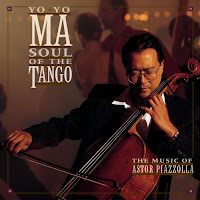
YO-YO MA


YO-YO MA
SOUL OF THE TANGO:
THE MUSIC OF ASTOR PIAZZOLLA (1997)

320 KBPS

Yo-Yo Ma might seem like an unlikely protagonist for the tango, but this intrepid musical explorer has taken his task seriously, collaborating with experienced tango musicians. Ma even participates in a posthumous collaboration with one 1987 Piazzolla recording. Furthermore, while he's obviously the headliner here, he doesn't dominate the arrangements nearly as much as he does the billing and photography of the disc. While the result isn't your essential Piazzolla album (that would have to include more of the composer's own playing), it's an atmospheric and convincing collection, perhaps a good introduction for those who don't know the music.

1. Libertango
2. Tango Suite: Andante
3. Tango Suite: Allegro
4. Sur: Regreso al Amo
5. Le Grand Tango
6. Fugata
7. Tango Remembrances
8. Mumuki
9. Tres Minutos con la Realidad
10. Milonga del Ángel
11. Café 1930

Thursday, September 10, 2009

WILLIAM SHELLER


WILLIAM SHELLER
LUX AETERNA/
LES PECHES DE JEUNESSE (1972)

REMASTER
320 KBPS

This is Sheller's debut album and it's quite atypical too. While his following works will mostly consist into a mix of pop, classical, chanson and rock this is a pop-oriented mass he wrote for a friends wedding hereby demonstrating (from the start!) his classical training and composing abilities. It's quite an astonishing work of art both those wanting something pop (in the 60s/70s sense of the word) and classical will enjoy.
The bonuses displayed here are a whole other thing. Those are the beginings of the man's work. It sometimes is clumsy but still enjoyable. Mostly pop songs, these are the first step of a true artist on the way to perfection.
Together, these two works do not really fit together and demand to be listened separately. Other than that, you just cannot not enjoy it.

1 Introit
2 Ave frater, rosae et aurae
3 Opus magnum (part 1)
4 Opus magnum (part 2)
5 Lux aeterna
6 Sous le signe des poissons
7 Hare Krishna
8 Sous le signe du Verseau
Bonus Tracks
Les Péchés de Jeunesse
9 My year is a day (Les Irresistibles)
10 Couleurs
11 Les 4 saisons
12 Leslie Simone
13 Adieu Kathy
14 She opened the door
15 Living East Dreaming West

Sunday, September 6, 2009

THE UKULELE ORCHESTRA OF GREAT BRITAIN


THE UKULELE ORCHESTRA
OF GREAT BRITAIN
ANARCHY IN THE UKULELE:
ROYAL ALBERT HALL, AUGUST 18TH 2009 (2009)

192 KBPS

The ukulele may not be the biggest or the most dynamic of musical instruments out there, but when eight of them, and their pluckers, gathered in a small semi-circle upon the stage of London's majestic Royal Albert Hall two nights ago, six thousand promenaders and thousands more radio listeners were totally enthralled.
And when it came to the Ukulele Orchestra of Great Britain's rendition of 'Anarchy in the U.K.' they damn near blew the roof off. So the jumping flea made the big time. And what a gig it was!
Promenaders were encouraged to take their own ukes along for a participatory number.
And when over a thousand ukes play Beethoven's 'Ode to Joy' with the other five thousand promenaders clapping along it truly is a joy to behold.
But of course the collective's real strength lies in their genre subversion. Bowie, The Beatles, The Stones, Shirley Bassey, The Who, Talking Heads, Robbie Williams, Hot Chocolate and more all get the subversive uke treatment. The segue of 'Ride of the Valkyries' into Hawkwind's 'Silver Machine' is just pure bloody genius. And if you haven't heard their version of Kate Bush's 'Wuthering Heights', well, that is well worth the download alone.
So, no matter where you are, what you're doing or what you're into; this is guaranteed to place a right big grin across your chops. And let's face it, we could all with a bit of cheering up, right! And believe me, you'll be humming 'Puffin' Billy' for ever.

1. Puffin' Billy (Edward White)
2. Anarchy in the U.K. (The Sex Pistols)
3. Ride of the Valkyries/Silver Machine (Richard Wagner/Hawkwind)
4. Life on Mars medley (David Bowie)
5. Thunderball (John Barry/Tom Jones)
6. Teenage Dirtbag (Wheatus)
7. Danse Macabre (Camille St Saëns)
8. And Did Those Feet in Ancient Time a.k.a. "Jerusalem" (William Blake)
9. Psycho Killer (Talking Heads)
10. Ode to Joy (Extract Beethoven's 9th: Choral)
11. Pinball Wizard (The Who)
12. Dambusters March (Eric Coates)
13. Sympathy for the Devil medley (Rolling Stones)
14. Wuthering Heights (Kate Bush)

Wednesday, August 26, 2009

JOHN ZORN [REPOST]


JOHN ZORN
ANGELUS NOVUS (1998)
320 KBPS

John Zorn has shown us many sides of his eclectic musical vision (some may think too many), but here is a side of Zorn's work that has pretty much remained hidden - his compositions for classical chamber ensembles. This CD marks the first in a series documenting these pieces, commissioned by some of the world's leading ensembles and appearing on CD for the first time.
The works here span over twenty years, and include Christabel, a student piece written in 1972 inspired by the romantic mystic poetry of Samuel Taylor Coleridge, the wind octet Angelus Novus composed for the world-renown Netherland's Wind Ensemble and dedicated to the Jewish cultural theorist Walter Benjamin, the dynamic chamber symphony For Your Eyes Only and Carny, a virtuosic solo piece that receives an impassioned and breathtaking performance by pianist Stephen Drury.
The Callithumpian Consort of the New England Conservatory (conducted by Stephen Drury) perform this challenging music with startling clarity and intensity on this CD that will surprise and delight Zorn fans and detractors alike.

1. For Your Eyes Only
2. Christabel Part 1
3. Christabel Part 2
4. Carny
Angelus Novus
5. Peshat
6. Tzomet
7. Aliya
8. Herut
9. Pardes